Category: Public Relations (page 4 of 17)

Social business webinar with Jay Krall, Cision’s Media Research Supremo

Cision

The Cision webinar on 8th November was dedicated to social business, and I was delighted to be the guest in the hot seat. It was great to be able to chat with Jay Krall and answer questions from listeners about the impact of social web and related technologies on organizational structure, culture, process and performance measurement this decade.

I've known Jay since we started following each other online several years ago now, and he took part in an Influence Scorecard workshop I ran in New York in 2010. His contributions were invaluable then, and London is better off for having persuaded Jay to upsticks from Chicago. And if ever there was a guy with the most fabulous radio voice...

The webinar is now available on Soundcloud.

Public Relations and the “ethical vacuum”

Leveson Inquiry

[Originally written for the CIPR Friday Roundup.]

"Too many stories in too many newspapers were the subject of complaints from too many people, with too little in the way of titles taking responsibility." Newspapers have often demonstrated "a significant and reckless disregard for accuracy" and "misrepresentation and embellishment takes place to a degree far greater than could ever be thought of as legitimate or fair comment."

I've just read the Leveson Inquiry, published yesterday and running to nearly two thousand pages. These quotes come from the forty page executive summary. For those of you beyond the UK's shores, the Inquiry is about the freedom of the press in both the positive and negative manifestations of that expression, with a focus on how we can attenuate the negative.

The UK enjoys a pluralistic media of which other countries are rightly envious, and a free press is central to our national identity. The report quotes Sir Winston Churchill: "A free press is the unsleeping guardian of every other right that free men prize; it is the most dangerous foe of tyranny ... Under dictatorship the press is bound to languish ... But where free institutions are indigenous to the soil and men have the habit of liberty, the press will continue to be the Fourth Estate, the vigilant guardian of the rights of the ordinary citizen."

Read more

The CIPR Friday Roundup +/- 5 years

[Originally written, obviously, for the CIPR Friday Roundup.]

The Kardashians first appeared in October 2007 just as it was becoming difficult to get a mortgage. I don't believe the two were related. I also sent out the first Friday Roundup... to eleven recipients.

Five years and 250 editions later (missing out the festive seasons), it's gone out to 9345 of you, which is fantastic. But let's look at some more interesting October 2007 facts, spanning the full gamut of topics we've covered here for PR professionals.

Facebook had just passed the thirty million user mark, approaching half that reported by MySpace. There were 350,000 of us on Twitter and ten million odd on LinkedIn – now half a billion and 175 million respectively.

There was no Kindle, no Android, no tablets, and no Justin Bieber. Nokia was number one in mobile phones, bigger than numbers 2, 3 and 4 combined. The Blackberry 8800 and the very first iPhone were the executive must-haves.

There was no FourSquare, Groupon, Pinterest, Instagram, Angry Birds, Prezi, Quora, Spotify, Mendeley, Blippar, Dropbox, Tweetdeck or Google+. And these were pre-Chatroulette days too, and pre-Barcelona principles come to that.

Read more

Internal communications discussed on CIPR TV

The latest episode of CIPR TV went out live yesterday afternoon, with plenty of interaction from the audience. The programme's guests are Jenni Wheller (@jenniwheller), Internal Communications Manager at SSP UK, and Mike Grafham (@mgrafham), Head of Customer Engagement at Yammer.

I think you'll agree the audience's questions and the guests' responses make for an interesting show. Rather than repeat anything covered in the show, I'll just take a few paragraphs here to make another observation.

Read more

Planning. Love it.

It's September already. How did that happen?!

As we approach the final quarter of the calendar year, many of us will have our first thoughts of the 2013 planning process. A few will relish the task. Many more will issue a quiet but discernible sigh.

But while time is still on our hands, perhaps I can offer up a couple of points to place a refreshing perspective on proceedings.

First up, can I ask you what the economy and your particular marketplace will look like this time next year? How about by Easter? Come to that, what will the lie of the land be in January?

Who knows! Let's face it, we live in uncertain times.

So having acknowledged our lack of visibility, why do we still pivot our discipline around a yearly plan? What exactly have marketing and public relations got in common with the time it takes the Earth to complete a particular cycle around the Sun anyway?

Read more

Too good

[Originally written for the CIPR Friday Roundup.]

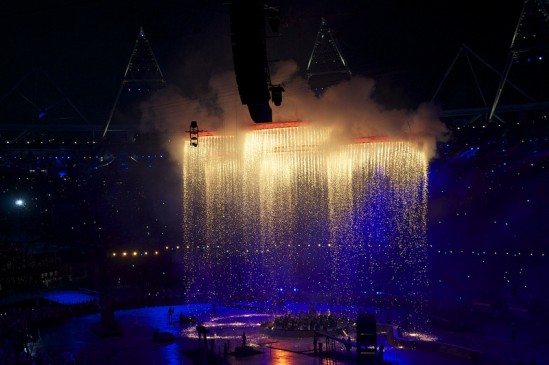
Regent Street London July 2012

The headline on my S3 this morning marks a marketing and PR lesson: Cameron urges people to return to capital amid 'ghost town' claims.

For the past several months, Londoners have been bombarded with messages begging them to adapt their normal routine during the Olympics period, to question their need to travel, to expect over-crowding and travel chaos in so many words.

My schedule hasn't changed. I'm jumping on the 94 from West London to Oxford Street every morning, and the return journey every evening, and it's been fantastic. The bus is half empty, the roads are half empty, and the journey time is the quickest I've ever known. But what's good for me hasn't been good for central London restaurants, theatre and other consumer serving business.

So this begs the interesting question, can a communications campaign over-communicate? Success in this instance has not increased in proportion with the resonance of the message. The resonance has been too great and we have overshot the happy optimal balance.

From a measurement and evaluation perspective, the output metrics will be out of line with the desired outcome. The output metrics will look awesome, the outcome looks considerably less so.

Despite this hiccup, it's been a fantastic games so far, excepting that badminton match, and I'm looking forward to the second week and a couple of dinners in town.

FIR Interview: Neville Hobson interviews Stephen Waddington and me about Share This

Neville HobsonShare This, the new book from the CIPR Social Media panel and friends, is selling rather well indeed. Having shot straight in at number 1 on Amazon UK's best new business book releases, it now resides at number 13 in the Sales & Marketing category.

Wiley, the publisher, has taken more than a handful of bulk orders directly from PR agencies, which of course don't then register on the Amazon charts else I'm sure the book would be Amazon's number 1 of course!

Neville Hobson, of the massively successful FIR (For Immediate Release) podcast, invited Stephen Waddington and me to discuss the book's content, audience, and the panel's future plans. Follow the link to listen now.

FYI, you may recall Neville interviewed me once before at my book launch party last year.

(Photo credit: Neville Hobson presenting at SMPR2012 by Coopr PR Bureau.)

Gold


London 2012 Olympic rings forged

(Originally written for the CIPR Friday Roundup.)

You'll congratulate me for noticing there's a sporting event starting today in London town. Too obvious then not to interweave some Olympic statistics into today's Roundup.

It's 2579 days (just over seven years) since London won the right to host the 2012 Olympics. The exact price tag is still to be totted up, but we're looking at somewhere north or south of 10,000,000,000 sterling; four times the original estimate.

The Olympic Delivery Authority has overseen the construction of 30 new bridges, the restoration of 8.35km of waterways, the building of 1.8km of sewer tunnels, the demolition of over 200 buildings, the removal of 52 electricity pylons, and the cleaning of more than two million tonnes of soil. And some more besides.

This exemplifies what organisations invest most of their information systems managing – the flows of time, money and materials. Managing these flows is business critical. Obviously.

The 21st Century organisation must extend its information systems to cover a fourth kind of flow, the flow of influence. Sure the Olympic Delivery Authority understands marketing and communications, but there is influence in everything an organisation does and sometimes in what it decides not to do. It's not just the domain of marketing and public relations. And the sooner organisations get the systems, processes, skills and culture in place to keep on top of the way influence goes around comes around, the quicker they'll put themselves in a gold medal position.

Happy Olympics.

[Photo credit: Nick J Webb]

Share This: The Social Media Handbook for PR, by the CIPR Social Media Panel

Share This book cover

After three months of social collaboration involving two dozen authors, we're just a few days away from publishing Share This: The Social Media Handbook for PR (Amazon UK). The authors, all members of the CIPR Social Media panel or friends of, decided that that there was a need for a handbook that covers the full gamut of issues facing the PR practitioner in 2012.

Incredibly, Lord Sugar provides the endorsement for the front cover :-)

I'm delighted to have authored two of the chapters, Chapter 17 on real-time public relations, and the final chapter looking at the future, beyond social media.

Here's the introductory video featuring CIPR CEO Jane Wilson, and then the Table of Contents. Read the CIPR's press release here. Pre-order your copy today!


Read more

The hunt for a new universal measure – we will never find it

PR Week podcast screenshot

The title of this post is one of my contributions to the recent PR Week video podcast on measurement where I was a guest alongside SpectrumInsight's Mark Westaby. PR Week's Sara Luker was in the chair, and it was fifteen minutes of good conversation.

As I say upfront, I'm a bit more optimistic than Mark about the future of the measurement and accountability of public relations, if only because I have faith in the Influence Scorecard approach.

For some reason only understood by PR Week I'm sure, the video cannot be embedded here, or indeed on PR Week's website. Not very social of them! It stands alone over on Brightcove, but you can click here to go and watch it now.

The accompanying article in PR Week is: "Measurement in PR has not changed in 20 years, say PROs". (PR Week may stop you reaching the article if you're not a subscriber, but at the time of writing any article on prweek.com is accessible if you search for the title on Google and then click the relevant search result.)