Archives (page 9 of 43)

Measuring communications and reconciling models, after Amsterdam

iamsterdam
The AMEC International Summit on Measurement played out in Amsterdam last week, and I tuned in from afar. On 18th June 2013 I published my thoughts on last year's events in Madrid, and I'll do the same now exactly one year on. Gladly. Gladly because I love the direction the AMEC community is going.

I don't intend to repeat any of the substance and lengthy and valuable commentary to my post last year – which I just enjoyed rereading, thank you. But I have taken the opportunity to append here the Slideshare that accompanied my assertions and that has accrued over three thousand views would you believe.

Perhaps one of my responses to the comments on last year's post is worth noting quickly, a response to Don Bartholomew:

I don't think of myself as a member of the measurement industry for the simple reason that I'm not! Rather, my company is a management consultancy helping organisations benefit from social media and related technologies. Our purview is very much about business performance, about organisational alignment for brilliant execution.

It's not about media

I believe the focus on outcomes in recent years is getting people to look up from media. AMEC is the Association for the Measurement and Evaluation of Communication, not "of Media", and I'd go further than that. Here are some of my core assertions of recent years: Read more

The Mozilla Manifesto amplified, from Internet to organization

Mozilla manifesto amplifiedInspired by the analogy of organization-as-software, and indeed the reality of organization-as-software, what might it look like to take a manifesto about software and digital networks and apply it to human networks and organization?

In my recent presentation, The Future of Organization, I took the majority of the Mozilla manifesto and replaced references to the Internet with references to organization. I liked the result so much I thought I'd post it separately here for ease of reference. Read more

Organization is software

Angkor Thom, Cambodia
This post is about an exciting vista for organization, one that may sound unhuman on the face of it but which, in contrast, I think could serve human dignity very well.

I first presented it in my Future of Organization video May 23rd, a presentation that appears to have been well received (and the accompanying Slideshare accrued over 2000 views in the week). Given the variety and perceptiveness of the comments the video garnered I'm particularly pleased to have excused the presentation up front as being far from comprehensive. Pete Burden picked up on building inclusiveness and sustainability, and humanity, pointing me to this webpage on concious business. And soulfulness was at the heart of a similar exchange with Frederic Laloux, author of Reinventing Organizations. (I consequently elevated the book to the top of my to-read pile and at page 36 I'm enjoying it very much so far.)

Mr. Wirearchy himself, Jon Husband, was good enough to 'tweet out' (appended here). And my dear friend Gabbi Cahane wondered what balance of my living in the future and living in the present might be best for business. Hmm, good point :-)

In this post, I'm referring to what I've named Bread incorporated – a distributed, self-regulating, incorruptible, frictionless market for organization. Here's the slide in question and the transcript: Read more

Access to this search result is denied, unless you have the money of course

access to this search result is denied
Today, Google has published a webpage with a form allowing anyone in Europe to ask that personal data be removed from search results. This follows the recent ruling by the Court of Justice of the European Union, deciding that:

  1. Indexing information by a search engine is ‘processing of personal data’
  2. Google is a ‘controller’ of personal data
  3. Spanish data protection law is applicable, even if indexing happens in the US
  4. Google should remove links to webpages containing personal data, even if the webpages themselves are lawful
  5. A fair balance should be sought between the legitimate interests of search engine users and the privacy rights of individuals
  6. The right to be forgotten is recognised by the Court of Justice.

I've owned the domains forgetweb.com and forgetweb.org since 2010, so this is something I've contemplated for some time and the domain names betray my leaning, yet I can confidently say the Court has got it wrong. Julian David, techUK CEO, explains why in The Telegraph: "Forget about it: the ECJ ruling on the 'right to be forgotten' is unworkable." I support his balanced sentiment 100% and would add one more vitally important perspective. Read more

The Future of Organization – a video presentation on the major themes and some new provocations

Office building in New York

There's a lot to think about when it comes to the future of organization, and plenty to be optimistic about. Saying that, like any and all topics worth grappling with, it takes a bit of time to get up to speed on the depth and breadth of things. As a member of the advisory council for the Future of Work community, and part of the steering group for The Responsive Organization community, I know I'm not the only one looking to communicate these ideas effectively.

Mike Grafham and I talked about compiling a three-minute explanatory video, and I failed woefully at such brevity. This 42-minute video presentation aims to provide a relatively speedy immersion in some of the main themes, spanning human rights, complexity science, the death of heuristics, the six influence flows, personal knowledge mastery, social physics, trust, the digital nervous system, Web 3.0, performance and learning, public relations, collective intelligence, sociocracy, Holacracy, podularity, wirearchy, emergent civilzation, self-organization, organized self, socioveillance, the middleware corporate, Bread incorporated, distributed autonomous corporates, and the Mozilla manifesto.

Read more

Fancy a coffee? Social business and your non-solicitation terms

Department of Coffee

The recent antitrust lawsuit against Apple, Google, Adobe and Intel for collusion in hiring practices demonstrates a lack of respect for the respective organisations' employees. Fundamentally, how dare one's employer collude with another in ways that may limit one's career progression!

Having been an employer carrying the not insubstantial costs of hiring I know how difficult it is to watch someone in whom you have invested considerable time, money and energy walk out the door, but I think my memory serves me well when I say we encouraged the team to celebrate such departures. If anything, our alumni network grew +1 each time.

When you define social business as I do, what might the clause for "non-solicitation" look like in your terms of business? How about this:

We believe our employees should be free to do whatever they consider best suits them. We do not therefore seek to apply any restrictions on their future employ. Their success is our success.

If such a declaration is representative of your wider values, you might find loyalty actually improves. By investing in our culture and award winning training and development, we felt comfortable wishing leavers the very best for the future. It felt right and served us all well.

[Image credit: Department of Coffee and Social Affairs – a fine selection of London coffee shops in which to have such conversations.]

The efficiency fallacy in the #responsiveorg context

responsive v efficiency
I'm at the #responsiveorg unconference in London today, and I'm on the hunt for dissensus rather than the echoic chamber of the converted preaching to the converted, as warm and lovely as that feels. So with that in mind, let me kick the tyres of one of the primary assumptions underpinning the #responsive org manifesto.

From Efficiency to Responsiveness – Historically, competitive advantages came from optimizing for efficiency and labor productivity of standardized product, with companies such as Walmart and Ford being common examples. As the flow of information increases, the competitive advantage is held by the organization that can react the fastest to new information. Companies achieve increased responsiveness by reducing the friction of information flow, increasing their iteration rate, decreasing their cost of failure, and optimizing their structures for adaptability.

This I like. I don't however agree that this means we should face-off efficiency and responsive (the main image heading this post is taken from the current #responsiveorg slideshare, embedded below fyi). The following table, which coincidentally featured in my very last post (Doing the triple loop – profound leadership), expains why:

Read more

Doing the triple loop – profound leadership

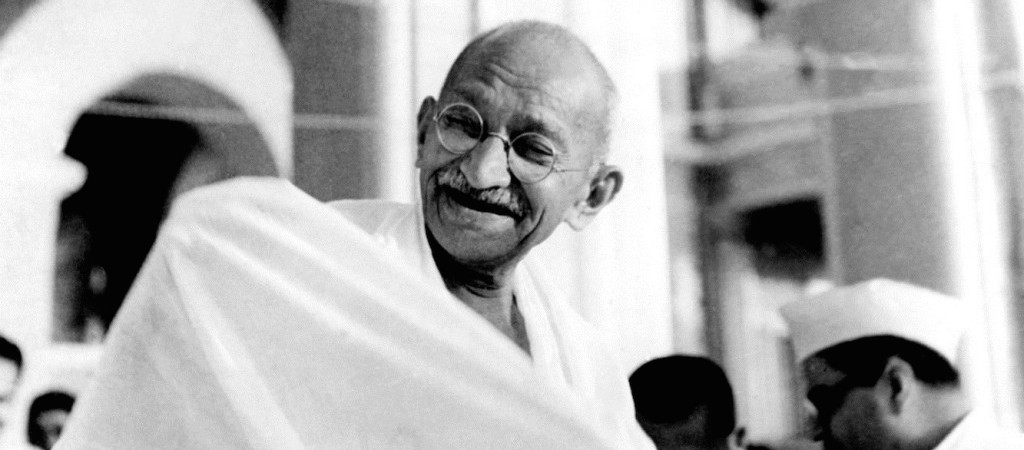
Gandhi

Drucker

Peter F. Drucker asserted: "What's measured improves." I'm a sucker for measurement and organizational learning as you can see from the posts tagged as such here – perhaps it's something to do with my engineering training.

I advocate tapping extant business performance management process to effect the evolution towards social business (on this blog, on briansolis.com, on stoweboyd.com, in the Balanced Scorecard Report), and that means getting to grips with the Balanced Scorecard and similar approaches.

The lexicon of performance management often involves so-called single-loop and double-loop learning, but a third loop gets less airtime in my experience. So as we debate the types of organizational design conducive to the potential and aspirations of social business – in the Future of Work, Responsive Org and Enterprise 2.0 communities for example – I thought I'd post the following table outlining ways to think about the loops.

Read more

The Internetome

Internetome conference, David Orban
Just going back through some archives and found the definition I developed for the Internetome conference in 2010. Sponsored by Intel, Qualcomm and the Consumer Electronics Association, it was, I believe, the UK's first all-day Internet of Things conference. The conference website bit the dust some time during my subsequent server migrations, so for posterity, particularly as everyone is talking about the Internet of Things these days ...

The Internetome

The Internet of Things marks the unprecedented intertwining of the Internet with the ‘real world’: the intangible information space with the tangible living space; ubiquitous computing and the informational augmentation of reality.

To date, we have employed ‘real world’ metaphors to aid our naming, definition and understanding of information technology, such as the biologically sourced terms web, bug, virus, worm, memory, backbone and sensor. And with the advent of the Internet of Things, IT now interweaves with the reality that provided the metaphors.

But we’re not interested in the technology per se. We’re interested in the many facets and implications of its application. So, borrowing from the use of the suffixes -ome and -omics to describe the object and study of a biological field (eg, genomics, the study of the genome), we make the following neologistic definitions:

The Internetome: the manifestations (facets and implications) of the Internet of Things.

Internetomics: the study of the Internetome directed at improving transdisciplinary understanding and its transdisciplinary design, governance and execution.

Just rediscovered this article about the conference on ReadWrite, written by David Orban (featured in the photo here).

Enterprise social networks and assimilation – resistance is futile

i want to borg
Enterprise social networking is perfectly suited for the so-called onboarding process.

I say so-called because no dictionary I have lists the word, which is sort of at odds with the fact that they do list the rather unlovely deplane. But I digress. I heard this same claim from Jive, SAP (Jam) and IBM (Connections) at a Eurocloud event last week courtesy of Alan and David @agile_elephant.

It seems academics prefer the phrase organizational socialization, defined as:

a learning and adjustment process that enables an individual to assume an organizational role that fits both organizational and individual needs. It is a dynamic process that occurs when an individual assumes a new or changing role within an organization.

I've been onboarded. Into the Mars way back in the day. Mars prides itself on high performance enabled by a strong culture, and boy were my colleagues keen that I got that culture.

The presentations last week (rather than my time at Mars, promise) prompted me to look up the Wikipedia entry for the Borg, the reason for which will become obvious by reading this if you're unfamiliar with the species: Read more