Category: Technology (page 4 of 10)

Taxi! Hailing a ride, but not too far into the future

yellow cab new yorkThe controversy Uber is causing right now prompted me to delve into the archives. Way back. Back to March 2000 when I was pitching a proposition called Peoplestaxi to the likes of 3i and Avis. It got selected for First Tuesday's "Wireless Matchmaking" events too. Here's a quick extract:

Peoplestaxi leverages the latest technologies and customer-centric e-business philosophy to deliver the ubiquitous, convenient and intelligent taxi management service for business and consumers.

... Bookings are accurate and quality is assured. Punctuality, customer relationship management, personal safety, event critical booking, full account management, multi-payment methods and community grouping are all delivered automatically, seamlessly and brilliantly.

... As Peoplestaxi restructures the taxi market, existing taxi firms will have to affiliate, find some niche or eventually die.

I'm chuffed that I managed to reference the future collaborative / sharing economy in there – "community grouping" – but perhaps that last sentence was the choicest bit of crystal ball gazing.

So how come this didn't become Uber? In short order:

  1. Smartphones hadn't been invented
  2. GPS units still cost a thousand US
  3. Oh, and the dotcom bubble burst just then, spectacularly.

I learned that the first aren't always first. The timing of disruption is a function of the disruption.

Important – the Internet is changing to a new protocol

strips of light

The Internet has transformed the world. Period. I think it's important then to help everyone understand what it is exactly. I'm not talking degree-level understanding of computer networking, but a feel for the kind of thing going on 'under the hood'.

This post explains the new numbering system for the Internet – fundamental for the continued health and prosperity of the Internet this century – and does so without the reader needing any prior technical understanding. There's an executive summary if you only have two minutes. And then more detail if you fancy. It describes what your organization needs to be doing and why.

Most of the post is based on a document I wrote under the auspices of the Department of Business, Innovation and Skills (BIS).

So let's get stuck in. Firstly, allow me to differentiate between two terms too often and erroneously used interchangeably.

The Internet and the World Wide Web are different things

The Internet emerged in the concluding months of the 1960s. The World Wide Web on the other hand, like many other protocols, 'runs' on top of the Internet, and first twinkled in the eye of Sir Tim Berners-Lee in 1989. Read more

Organization is software

Angkor Thom, Cambodia
This post is about an exciting vista for organization, one that may sound unhuman on the face of it but which, in contrast, I think could serve human dignity very well.

I first presented it in my Future of Organization video May 23rd, a presentation that appears to have been well received (and the accompanying Slideshare accrued over 2000 views in the week). Given the variety and perceptiveness of the comments the video garnered I'm particularly pleased to have excused the presentation up front as being far from comprehensive. Pete Burden picked up on building inclusiveness and sustainability, and humanity, pointing me to this webpage on concious business. And soulfulness was at the heart of a similar exchange with Frederic Laloux, author of Reinventing Organizations. (I consequently elevated the book to the top of my to-read pile and at page 36 I'm enjoying it very much so far.)

Mr. Wirearchy himself, Jon Husband, was good enough to 'tweet out' (appended here). And my dear friend Gabbi Cahane wondered what balance of my living in the future and living in the present might be best for business. Hmm, good point :-)

In this post, I'm referring to what I've named Bread incorporated – a distributed, self-regulating, incorruptible, frictionless market for organization. Here's the slide in question and the transcript: Read more

Access to this search result is denied, unless you have the money of course

access to this search result is denied
Today, Google has published a webpage with a form allowing anyone in Europe to ask that personal data be removed from search results. This follows the recent ruling by the Court of Justice of the European Union, deciding that:

  1. Indexing information by a search engine is ‘processing of personal data’
  2. Google is a ‘controller’ of personal data
  3. Spanish data protection law is applicable, even if indexing happens in the US
  4. Google should remove links to webpages containing personal data, even if the webpages themselves are lawful
  5. A fair balance should be sought between the legitimate interests of search engine users and the privacy rights of individuals
  6. The right to be forgotten is recognised by the Court of Justice.

I've owned the domains forgetweb.com and forgetweb.org since 2010, so this is something I've contemplated for some time and the domain names betray my leaning, yet I can confidently say the Court has got it wrong. Julian David, techUK CEO, explains why in The Telegraph: "Forget about it: the ECJ ruling on the 'right to be forgotten' is unworkable." I support his balanced sentiment 100% and would add one more vitally important perspective. Read more

The Internetome

Internetome conference, David Orban
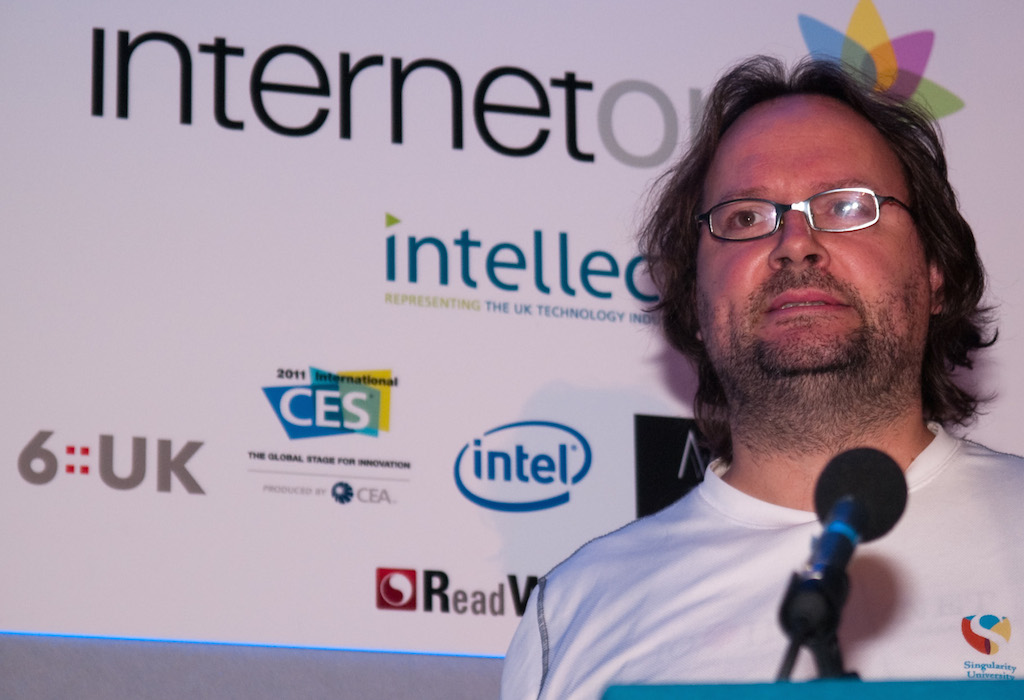
Just going back through some archives and found the definition I developed for the Internetome conference in 2010. Sponsored by Intel, Qualcomm and the Consumer Electronics Association, it was, I believe, the UK's first all-day Internet of Things conference. The conference website bit the dust some time during my subsequent server migrations, so for posterity, particularly as everyone is talking about the Internet of Things these days ...

The Internetome

The Internet of Things marks the unprecedented intertwining of the Internet with the ‘real world’: the intangible information space with the tangible living space; ubiquitous computing and the informational augmentation of reality.

To date, we have employed ‘real world’ metaphors to aid our naming, definition and understanding of information technology, such as the biologically sourced terms web, bug, virus, worm, memory, backbone and sensor. And with the advent of the Internet of Things, IT now interweaves with the reality that provided the metaphors.

But we’re not interested in the technology per se. We’re interested in the many facets and implications of its application. So, borrowing from the use of the suffixes -ome and -omics to describe the object and study of a biological field (eg, genomics, the study of the genome), we make the following neologistic definitions:

The Internetome: the manifestations (facets and implications) of the Internet of Things.

Internetomics: the study of the Internetome directed at improving transdisciplinary understanding and its transdisciplinary design, governance and execution.

Just rediscovered this article about the conference on ReadWrite, written by David Orban (featured in the photo here).

ZiL Lane 2.0 – the new killer app for the interwebs

ZIL LANE 2.0 - the new killer app for the interwebsThe pitch for this new product is simple:

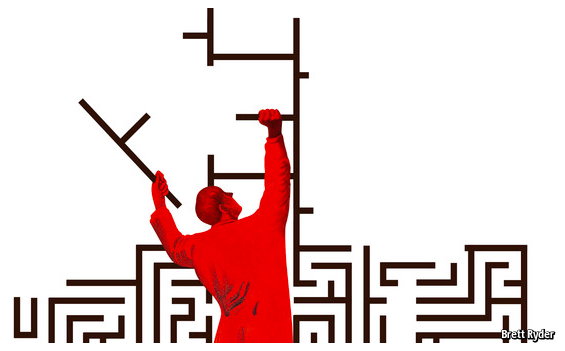
The Internet is the most important infrastructure we've ever created, so we mustn't neglect it. We need to build infrastructure for fast, pervasive and inclusive connectivity. We need to invest.

And where should the money come from? It's obvious. Those who use today's infrastructure freely for their commercial gain should pay for the privilege. Blockbuster paid for its own video rental shops, so why shouldn't Netflix pay to deliver its products down our pipes?

For-profit companies cannot expect a free ride. They pay. We all benefit.

So, are you buying ZiL Lane 2.0?

Net neutrality and ZiL Lanes

Net neutrality is a simple principle integral to the original design of the Internet and, to many minds including mine, absolutely essential to it. The principle asserts that the network will not prioritise – and by inference discriminate – some traffic over other traffic based on where it's come from. Sure, we're all happy to prioritise traffic constituting a video feed over email because who cares if the email takes another tenth of a second to arrive, but we should not for example allow those who operate the Internet infrastructure to prioritise one party's video feed over another.

Why? Read more

Big data. Big trust.

trust

This morning, my colleague Hector Arthur pointed me to a new report from Ovum's Mark Little knowing I'd have a few comments to make. In the corresponding blog post – "Big Trust is Big Data’s missing DNA" – Mark kicks off with:

In the rush to monetize customer data, companies risk diminishing the trust people have in services and brands. Sustaining and growing people’s trust in services is not just about “doing the right thing,” but also makes commercial sense.

As I like to say in other words, big data is worth more when wielded with customers rather than at them. Ovum calls this approach Big Trust.

Big Trust strategies are designed to build “trust equity” with customers as a basis for making core services stickier, for selling new services, and for brokering personal data to commerce under a new set of trust principles.

Public relations

The outlook is informed, directly or indirectly I know not, by the excellence theory of public relations presented by James E Grunig more than twenty years ago, which champions the two-way symmetrical PR model. This model uses communication to negotiate with the public, resolve conflict and promote mutual understanding and respect between the organization and its stakeholders. My Six Influence Flows model from 2011 extends this work for the digital / social / big data age, and you can find out more about PR models in my post here if it's your thing.

Of course, this is not how the majority of practitioners practice PR, deferring instead to publicity and 'spin', which may be associated more closely with distrust than trust. But excellent practice is championed if, as a shrewd procurer, you know where to look. Read more

You have to deal with both complication and complexity, so you’d better know the difference

The Economist, Schumpeter, Complicated, 23 Nov 13

The Schumpeter column in The Economist got it wrong: "It's complicated. Management thinkers disagree on how to manage complexity." The column comments on the recent 5th Global Drucker Forum – Managing Complexity and describes organizations as having two choices, deal with complexity or simplify.

Those that deal with complexity "may look complex and unwieldy but they have an inner logic and powers of self-organisation." In contrast, "the second, rival solution to dealing with complexity is to impose simplicity."

But to present the situation as 'either / or' is simply misleading, and I think it comes down to a failure to appreciate the critical difference between complexity and complication, a difference that must be well understood when redesigning the way your organisation works. Read more

An introduction to Web 3.0 for Social Data Week

Next week is Social Media Week. That's well known. What's less well known is that this is Social Data Week, and this facet of social underpins a lot of the stuff on next week's agenda. Nevertheless, many people with social in their job description, from public relations to marketing to 'digital', are not yet fluent in the data foundations.

One aspect of social data that particularly excites me is the Semantic Web, often referred to as Web 3.0. According to Sir Tim Berners-Lee, the inventor of the World Wide Web, Web 3.0 describes the web as a universal medium for the exchange of data, information and knowledge. It's an awesome vision that's playing out right now.

BrandwatchBrandwatch is one company that understands social data better than most.

I've known Giles Palmer, the founder and CEO of Brandwatch, since I interviewed him for one of the first ebooks on social analytics all the way back in 2008. Brandwatch shares my enthusiasm for the Semantic Web and related technologies, so I'm delighted that the company has sponsored the production of this stack.

If you're procuring or reviewing your current choice of social listening, analytics and intelligence service, then check them out.

A presentation to the Open Mobile Alliance conference on big data

According to its website, the Open Mobile Alliance "was formed in June 2002 by the world’s leading mobile operators, device and network suppliers, information technology companies and content and service providers. OMA delivers open specifications for creating interoperable services that work across all geographical boundaries, on any bearer network."

The OMA met today in Dublin to discuss aspects of big data, and I was invited to present on personal data, social media and social business.

I've met some great people today and we've covered some pretty geeky things between us, but the experience has left me with a renewed appreciation of the differences between 'net' and 'telco' people. For example, this was the first conference I've been to in many years that didn't have an agreed hashtag, or many people tweeting come to that. And mine was the only stack not to claim copyright, rather my normal Creative Common licensing. Trivial examples maybe, but indicative nonetheless of a different (but no less apposite) mindset.

I've tried my best to persuade a standards-setting collective to think harder about when to intervene and about the longer-term ramifications they might have on all the good stuff the Internet, the open Web and related technologies can do and are doing for humanity and our custodianship of the planet. That's not to undermine the value of standards, far from it, but as the saying goes, everything can start to look like a nail when you have a hammer.

I asked them to think about "humans" or "people" rather than "consumers" and "users", and about putting the facility for all humans to realise their full potential ahead of shareholders. That's not counter-capitalist. I put shareholders' best interests first by putting them second. You can find out more about this perspective in my recent ebook, Attenzi - a social business story.